
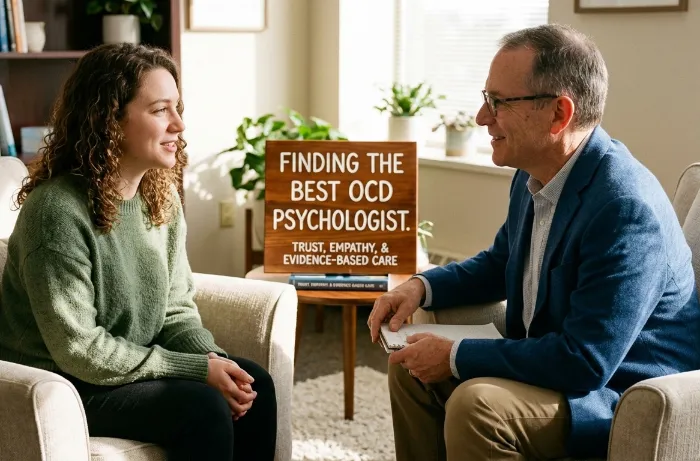
This article explains what truly defines the best psychologist for OCD treatment, how OCD is treated using evidence-based therapy, and why choosing a specialist makes a real difference in long-term recovery.
Who Is the Best Psychologist for OCD Treatment? A Clinical Perspective
When people search for the best psychologist for OCD treatment, they are usually not looking for popularity or advertisements. They are looking for expertise, clarity, safety, and real recovery. Obsessive Compulsive Disorder (OCD) is a complex anxiety-related condition, and effective treatment requires specialized psychological training, not generic counseling.
This article explains what truly defines the best psychologist for OCD, how OCD should be treated, and why choosing the right professional makes a significant difference in recovery outcomes.
What Makes a Psychologist the Best for OCD Treatment?
From a clinical psychology perspective, the best psychologist for OCD treatment is someone who:
-
Specializes specifically in OCD and anxiety disorders
-
Understands intrusive thoughts without judgment
-
Uses evidence-based therapies like ERP and CBT
-
Does not reinforce reassurance or compulsions
-
Educates clients clearly about how OCD works
-
Focuses on long-term recovery, not temporary relief
OCD is not just overthinking. It involves deeply ingrained fear cycles that require structured psychological intervention.
Why OCD Requires Specialized Psychological Treatment
OCD works through a predictable but powerful cycle:
Trigger → Obsession → Anxiety → Compulsion → Temporary Relief → Repeat
Many well-meaning therapists unintentionally worsen OCD by:
-
Providing excessive reassurance
-
Encouraging thought suppression
-
Validating fear-based interpretations
The best psychologist for OCD understands that thoughts are not the problem — the response to thoughts is.
Evidence-Based Therapies Used by the Best OCD Psychologists
Exposure and Response Prevention (ERP)
ERP is considered the gold standard for OCD treatment. It helps individuals face feared thoughts or situations while resisting compulsive behaviors, allowing anxiety to reduce naturally over time.
Cognitive Behavioral Therapy (CBT)
CBT helps identify and modify distorted beliefs such as excessive responsibility, intolerance of uncertainty, and fear of thoughts.
Hypnotherapy (When Clinically Appropriate)
Clinical hypnotherapy can help reduce subconscious fear responses and emotional reactivity that maintain OCD symptoms, especially in chronic or emotionally rooted cases.
The best psychologists personalize therapy rather than using a one-size-fits-all approach.
Common OCD Types That Require Expert Handling
A psychologist experienced in OCD treatment is trained to handle sensitive subtypes such as:
-
Religious OCD (Scrupulosity)
-
Cleaning OCD
-
Contamination OCD
-
Pedophile OCD
-
Harm OCD
-
Relationship OCD (ROCD)
-
Pure O OCD (mental compulsions)
These forms of OCD are often misunderstood and require non-judgmental, highly skilled psychological care.
Why Experience and Ethical Practice Matter in OCD Treatment
OCD clients are often vulnerable, fearful, and ashamed of their thoughts. The best psychologist for OCD treatment:
-
Never labels intrusive thoughts as intentions
-
Maintains strict confidentiality
-
Explains symptoms scientifically, not morally
-
Encourages independence rather than dependence
-
Avoids fear-based treatment methods.
Ethical, evidence-based practice is essential in mental health care.
Why Most People Consider Dr. Kashika Jain Among the Best Psychologists for OCD Treatment
Dr. Kashika Jain is an internationally trained hypnotherapist and clinical psychologist specializing in OCD, anxiety disorders, and intrusive thoughts. Her clinical approach focuses on education, empowerment, and evidence-based recovery, rather than symptom suppression.
Key aspects of her OCD treatment approach include:
-
Specialized experience in multiple OCD subtypes
-
Clear explanation of intrusive thoughts and fear cycles
-
Use of ERP, CBT, and acceptance-based methods
-
Non-judgmental and ethical therapy environment
-
Focus on long-term recovery and relapse prevention
Her work emphasizes that OCD thoughts do not define a person’s character or intentions.
Can OCD Be Treated Without Medication?
Yes. Many individuals recover from OCD using psychological therapy alone. The best psychologist evaluates each case individually and recommends medication only when clinically necessary, not as a default solution.
Therapy helps individuals:
-
Stop responding to intrusive thoughts with fear
-
Reduce compulsive behaviors
-
Build tolerance for uncertainty
-
Regain confidence in daily life
How Long Does OCD Treatment Take?
There is no fixed duration for OCD treatment. Recovery depends on multiple individual factors such as the severity of symptoms, type of OCD, duration of the problem, personal coping style, and consistency with therapy. Each person’s recovery journey is unique. Some individuals notice improvement gradually, while others require longer-term psychological support. The focus of OCD treatment is not speed, but building the ability to respond differently to intrusive thoughts and reduce compulsive behaviors over time.
How to Choose the Right Psychologist for OCD
When choosing a psychologist for OCD treatment, consider asking:
-
Do you specialize in OCD and intrusive thoughts?
-
Do you use ERP as part of treatment?
-
How do you handle reassurance-seeking?
-
Do you explain the OCD cycle clearly?
The right professional will answer confidently and transparently.
Final Thoughts: Finding the Best Psychologist for OCD Treatment
The best psychologist for OCD treatment is not defined by popularity, but by clinical expertise, ethical practice, and proven therapeutic methods. OCD is highly treatable when approached correctly.
With the right psychological support, individuals can break free from fear-driven cycles and regain control over their lives.
Need Professional Help for OCD?
If OCD or intrusive thoughts are affecting your daily life, consulting a specialized psychologist can be a life-changing step.





Mitul
28 Feb 2026She is best dr for ocd its my personal experience that dr kashika jain is no 1 psychologist